

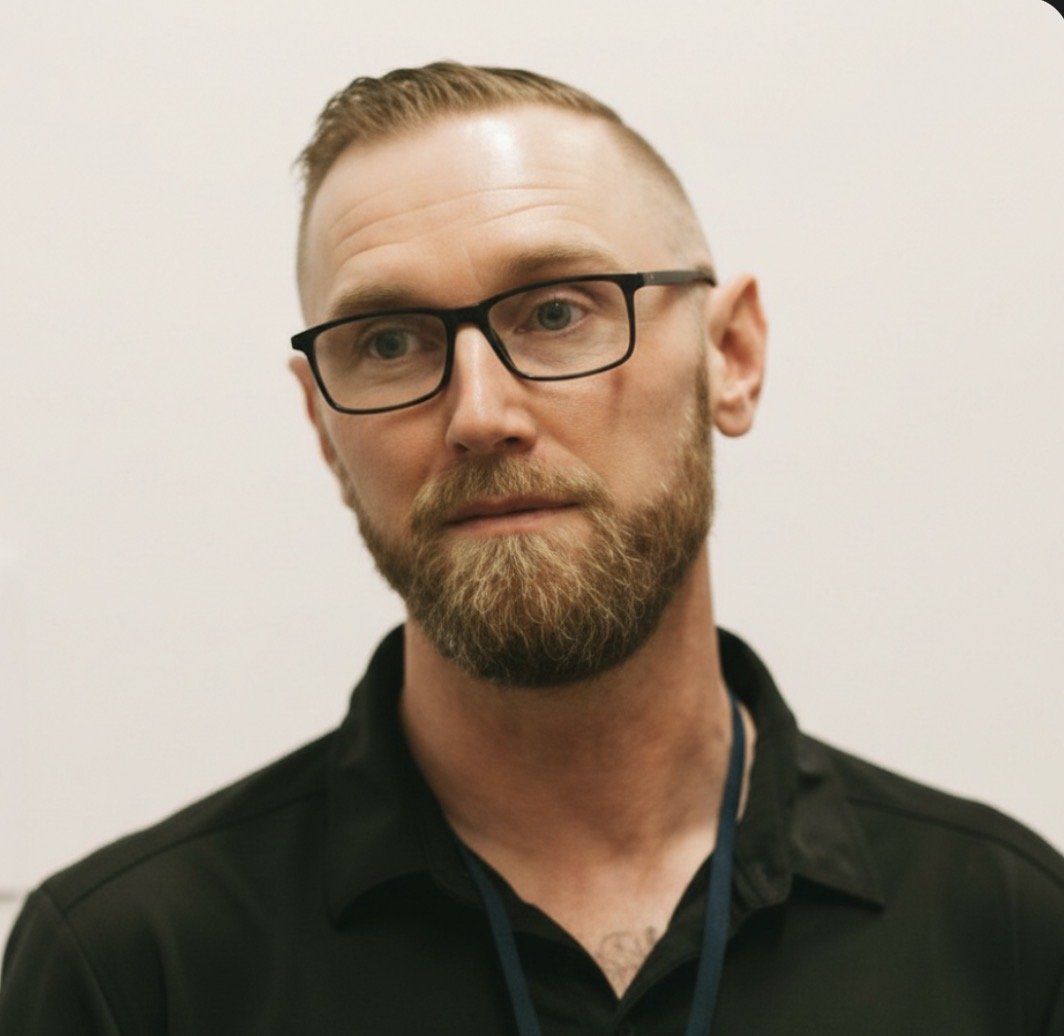
About Sean Yocum
Long before Sean Yocum became a Board Certified Behavior Analyst or founded Hickory Learning Group, he was simply a big brother.
Growing up in the 1990s, Sean watched his younger brother navigate life with autism during a time when awareness was limited, services were scarce, and many families were left to figure things out on their own. His family experienced firsthand the uncertainty, the advocacy, the difficult decisions, and the constant search for people who genuinely understood both the child and the family.
Those experiences shaped the way Sean views autism to this day.
He learned early that a diagnosis affects far more than the individual—it changes the daily lives of parents, siblings, grandparents, teachers, and entire support systems. He also learned that families are remarkably resilient when they are equipped with the right knowledge, support, and encouragement.
That perspective stayed with him throughout his professional career.
After becoming a behavior analyst, Sean worked across home, clinic, school, and community settings, serving children with diverse developmental needs and supporting hundreds of families. Along the way, he began noticing a pattern that was difficult to ignore.
Children were making progress during therapy sessions, yet many families still felt uncertain about what to do when the therapist wasn't there.
Clinicians were working incredibly hard.
Parents were working incredibly hard.
But the system often measured success by the number of therapy hours delivered instead of the independence those hours were creating.
For Sean, this wasn't simply a clinical problem—it was a personal one.
He often found himself thinking back to his own family's experience and asking a simple question:
"If this were my brother, what would I want for my family?"
The answer was never more therapy.
The answer was confidence.
Confidence that parents could navigate difficult behaviors.
Confidence that skills would transfer into everyday life.
Confidence that progress would continue long after services ended.
That question ultimately became the foundation for Hickory Learning Group.
Rather than creating another traditional ABA clinic, Sean set out to build an organization around a different definition of success:
When families no longer need us.
From its beginning, Hickory Learning Group has been committed to transferring behavioral skills from the clinician to the people who spend the most time with the child—their parents, caregivers, siblings, teachers, and natural support systems.
This philosophy challenged many long-standing assumptions within the field.
Instead of asking, "How many therapy hours should a child receive?" Hickory Learning Group asks, "How can we make every therapy hour multiply throughout the other 168 hours of the week?"
That philosophy led to the development of the Rule of 168, emphasizing that meaningful behavior change happens in everyday life—not only during therapy sessions. It inspired the GAIN Protocol, which measures caregiver competence as a clinical outcome, recognizing that lasting progress depends on empowering the people who are with the child long after services end. It also shaped Hickory Learning Group's Graduation Philosophy, where reducing services is viewed as a marker of clinical success because independence—not dependence—is the ultimate goal.
Sean's perspective evolved even further when he became a father himself.
Parenthood reinforced what his childhood and years of clinical practice had already taught him: parents are not barriers to treatment—they are the most important people in a child's development. Clinicians bring expertise in behavior analysis, but parents are the lifelong experts on their own child. The most meaningful outcomes occur when those two forms of expertise work together.
Today, Sean serves as the CEO of Hickory Learning Group, leading an organization built around ethical, family-centered, value-based care. His work focuses on helping children develop meaningful skills while ensuring families leave treatment feeling capable, confident, and equipped to support lifelong success.
Sean is also the co-host of the Rad N Bad Podcast, where he and fellow behavior analyst Michael Carrero challenge conventional thinking within the field of ABA. Together, they facilitate candid conversations about leadership, ethics, clinical quality, supervision, healthcare policy, and the future of behavior analysis—always with the goal of improving outcomes for the families the profession serves.
Whether speaking to parents, clinicians, or healthcare leaders, Sean's message remains the same:
The future of ABA isn't measured by how many hours we provide. It's measured by how many hours families no longer need us.
Because the greatest measure of success isn't creating lifelong clients.
It's helping families build the confidence to thrive long after therapy has ended.